Explore our premium quality collection designed for international markets, featuring durable materials, expert cuts, and modern streetwear detailing.
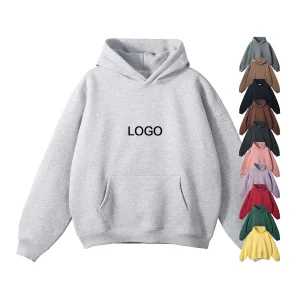
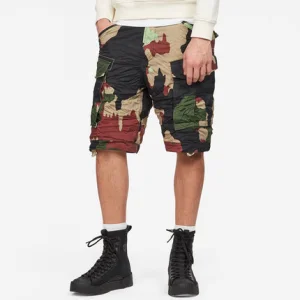
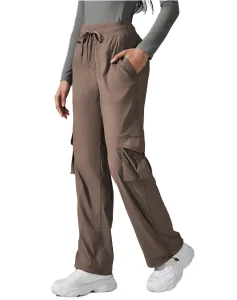
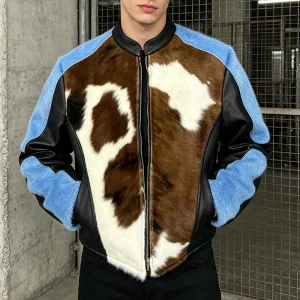
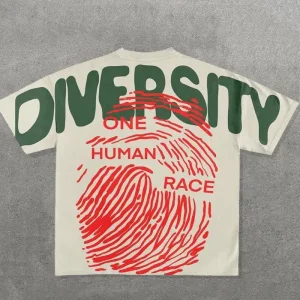
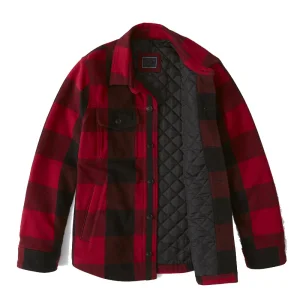
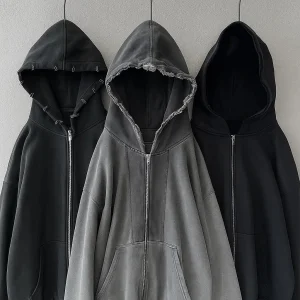
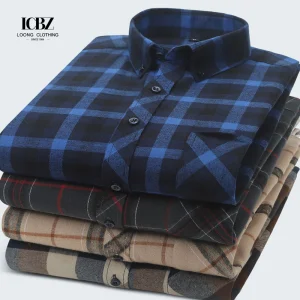
An in-depth analysis of changing buyer demographics, functional expectations, and quality requirements in the commercial workwear and fashion sectors.
The global denim overalls and utility bib market is undergoing a major structural evolution. What was once purely heavy-duty protective workwear for agricultural and mechanical laborers has transformed into a high-margin, performance-driven fashion segment. Today's commercial denim procurement demands a complex balance: the rugged construction of traditional workwear combined with modern fits, ergonomic motion panels, and sustainable fabric finishes.
For international buyers—including fashion brand owners, streetwear designers, and industrial uniform distributors in North America, Europe, and Asia-Pacific—finding a reliable denim manufacturing partner in China means looking beyond low costs. Corporate procurement executives prioritize manufacturing resilience, technical wash standards, and ethical compliance. In response to these shifts, premium manufacturers like Guangdong NovaFair Fashion Co., Ltd. have re-engineered their business models, shifting from basic OEM facilities into vertically integrated ODM and custom development partners.
Modern Google SEO metrics and quality rater standards focus heavily on Experience, Expertise, Authoritativeness, and Trustworthiness (E-E-A-T). For buyers, transparency is key. Understanding where your organic cotton is sourced, the specific dye technologies used (such as liquid indigo and aniline-free reduction), and the physical capabilities of sewing factories is vital to managing upstream risk.
This whitepaper details the manufacturing standards, technical setups, and supply chain strategies of Guangdong NovaFair Fashion Co., Ltd. With over 20 years of experience, NovaFair bridges the gap between high-volume efficiency and flexible, low-MOQ fashion production.
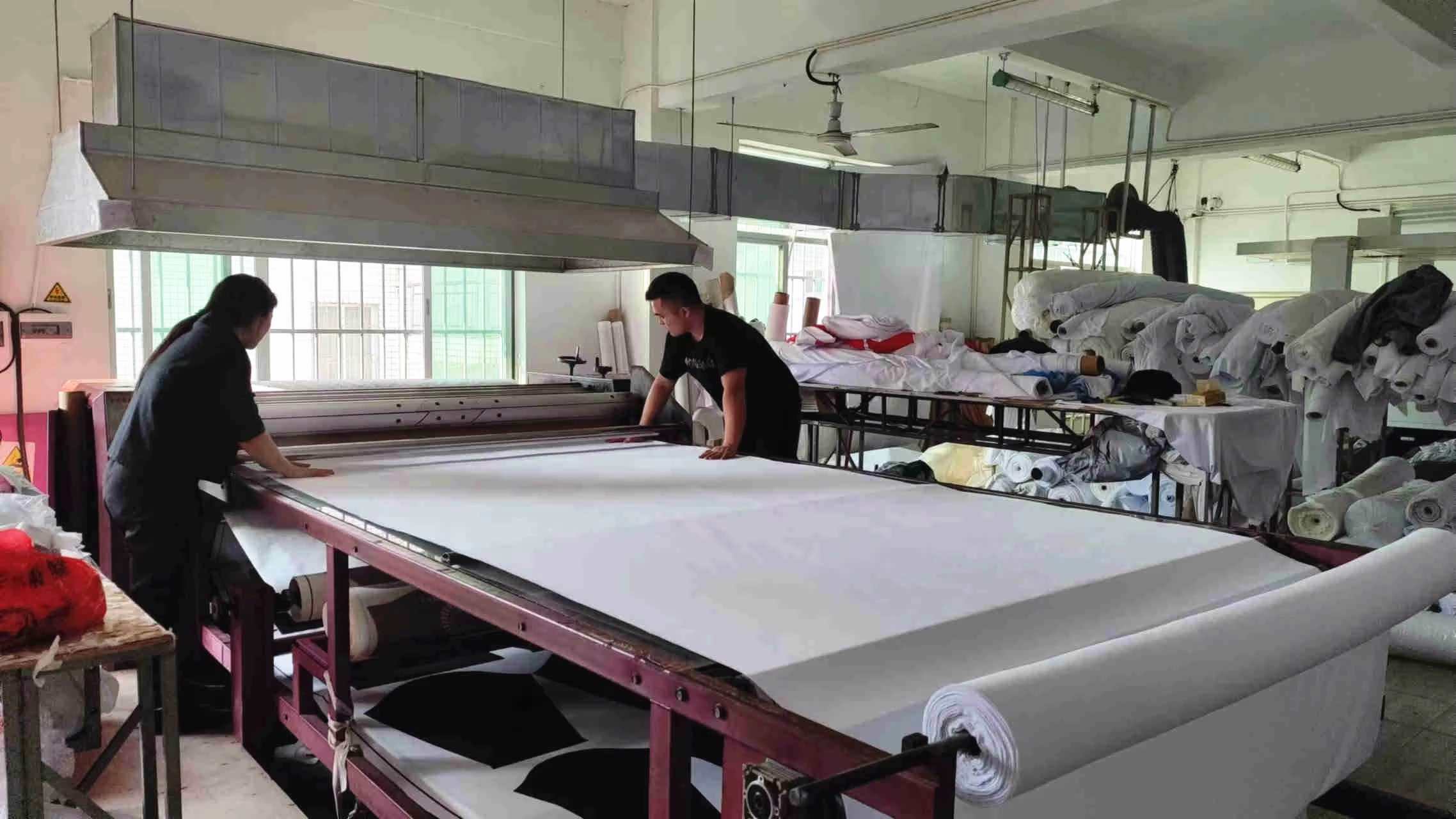
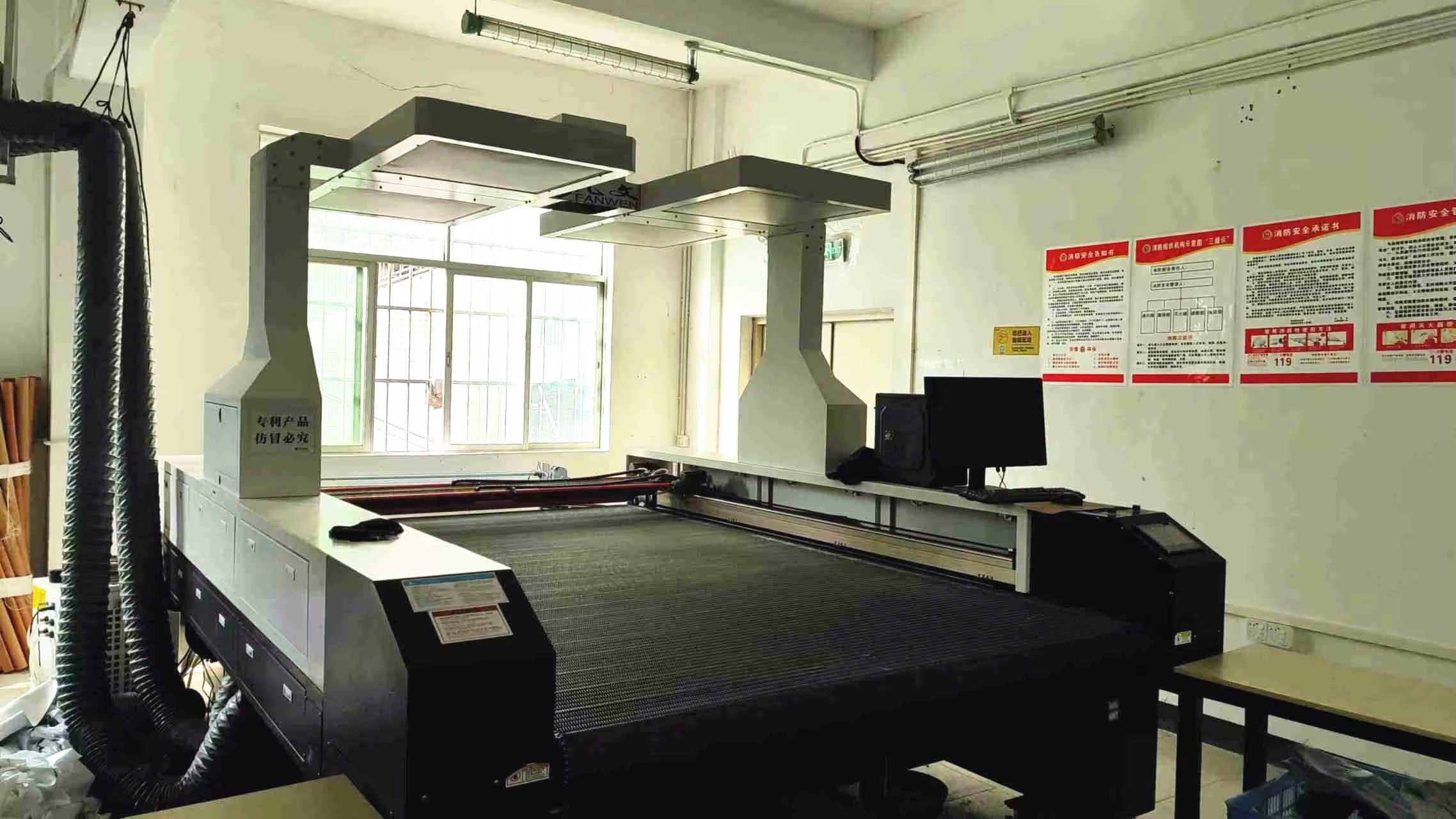
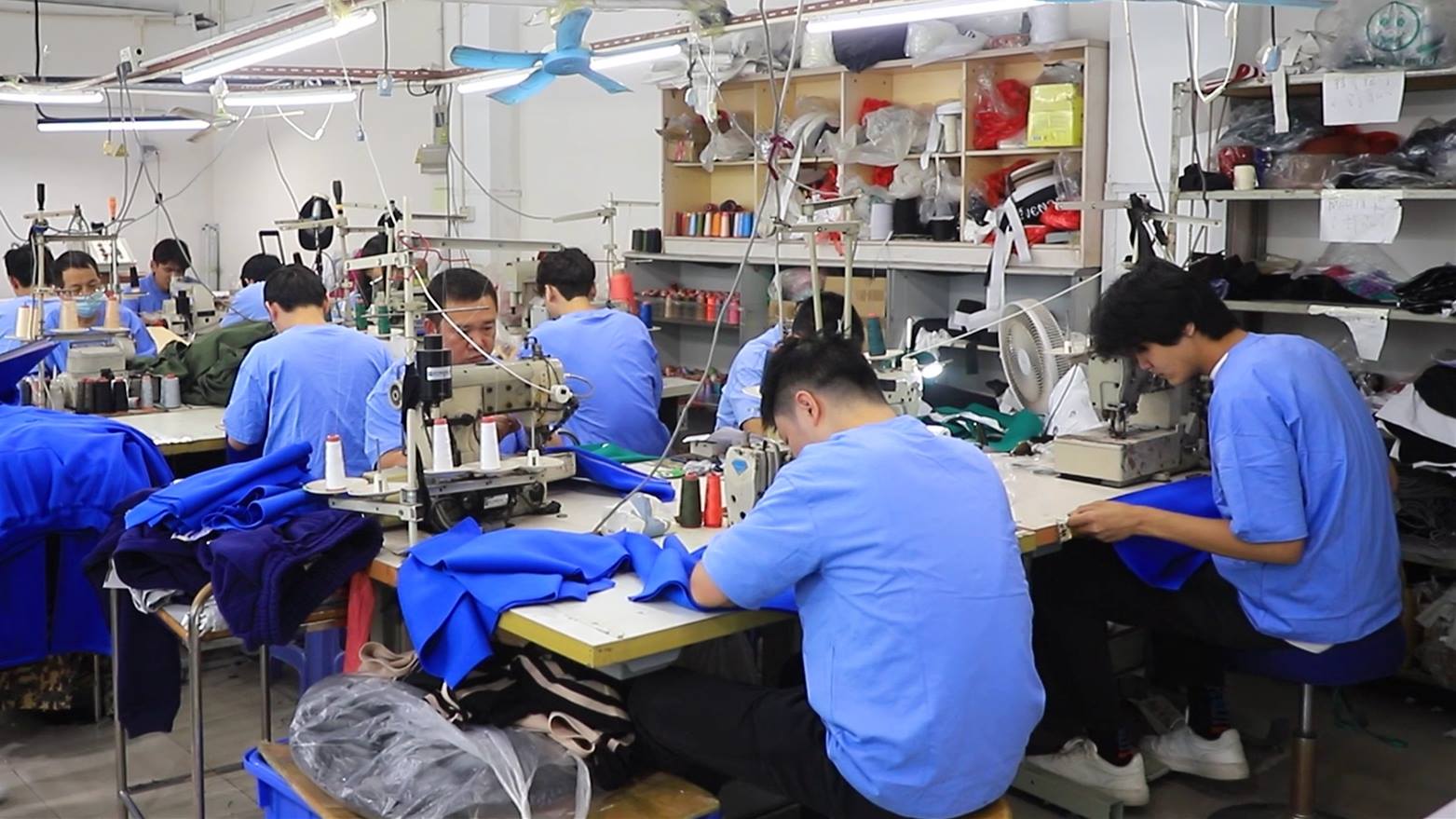
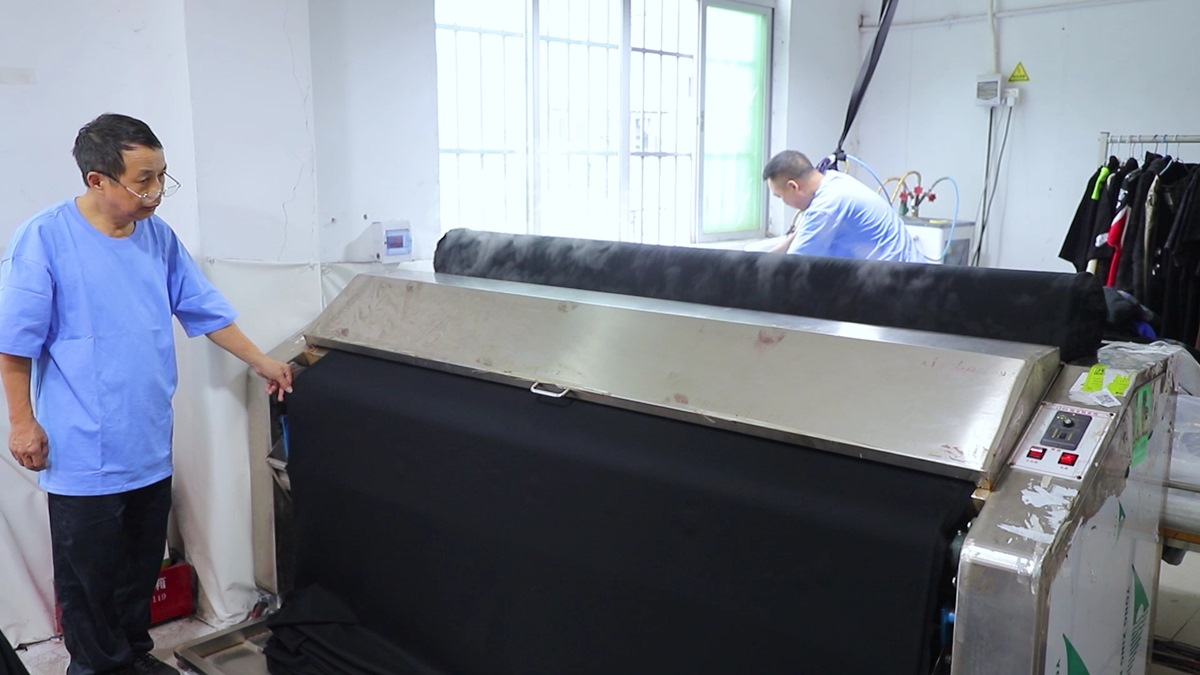
A step-by-step review of NovaFair's design, cutting, fabrication, printing, and quality control systems, using state-of-the-art machinery.
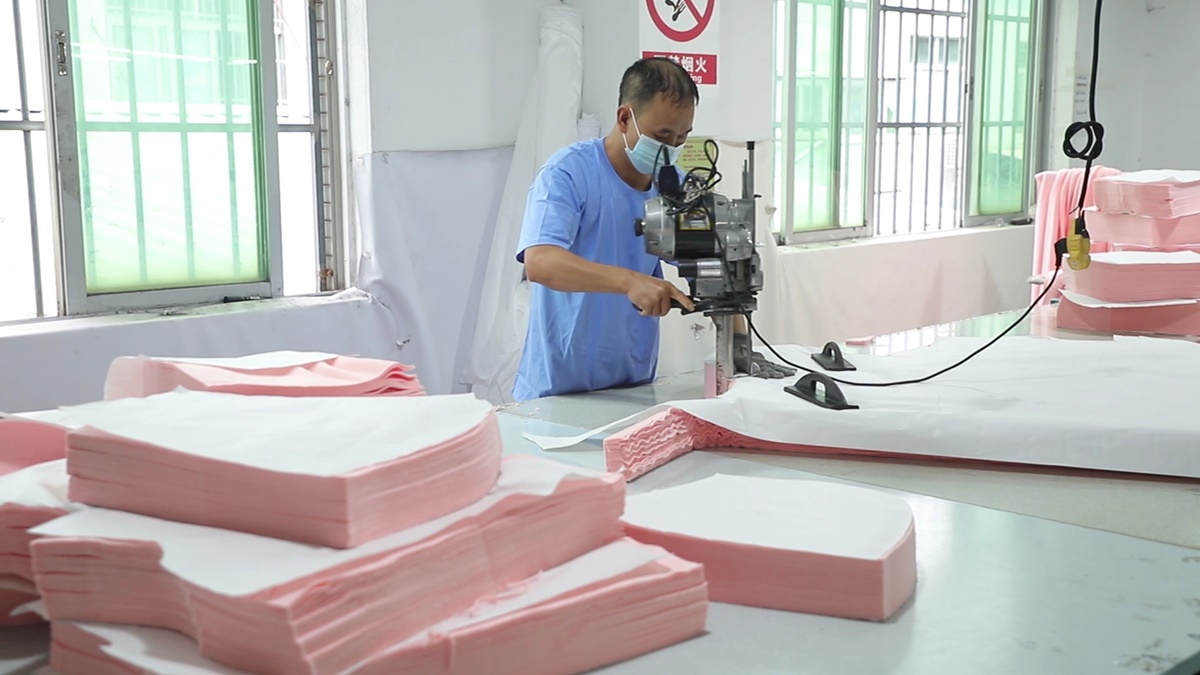
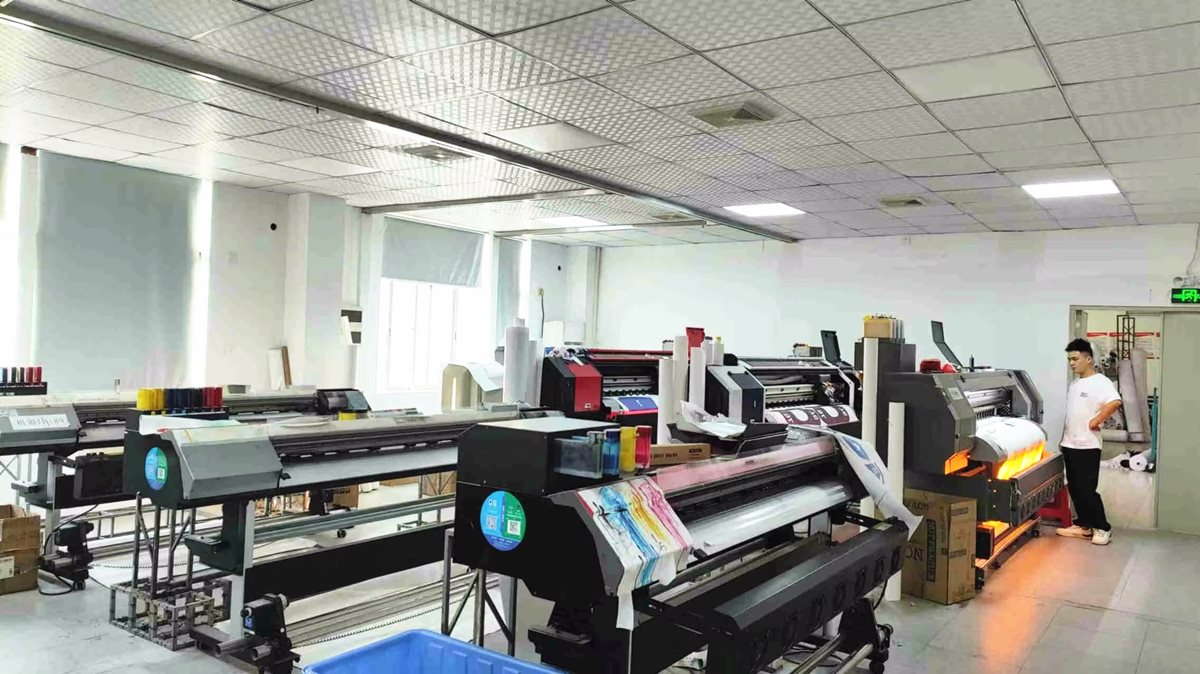
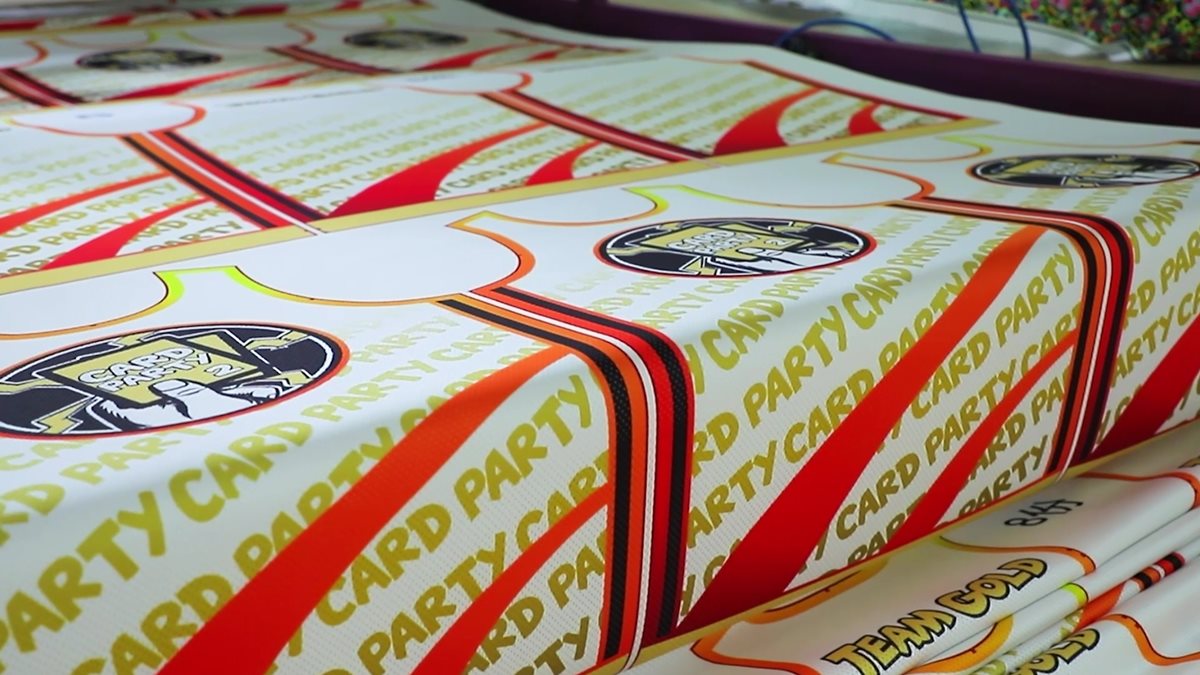
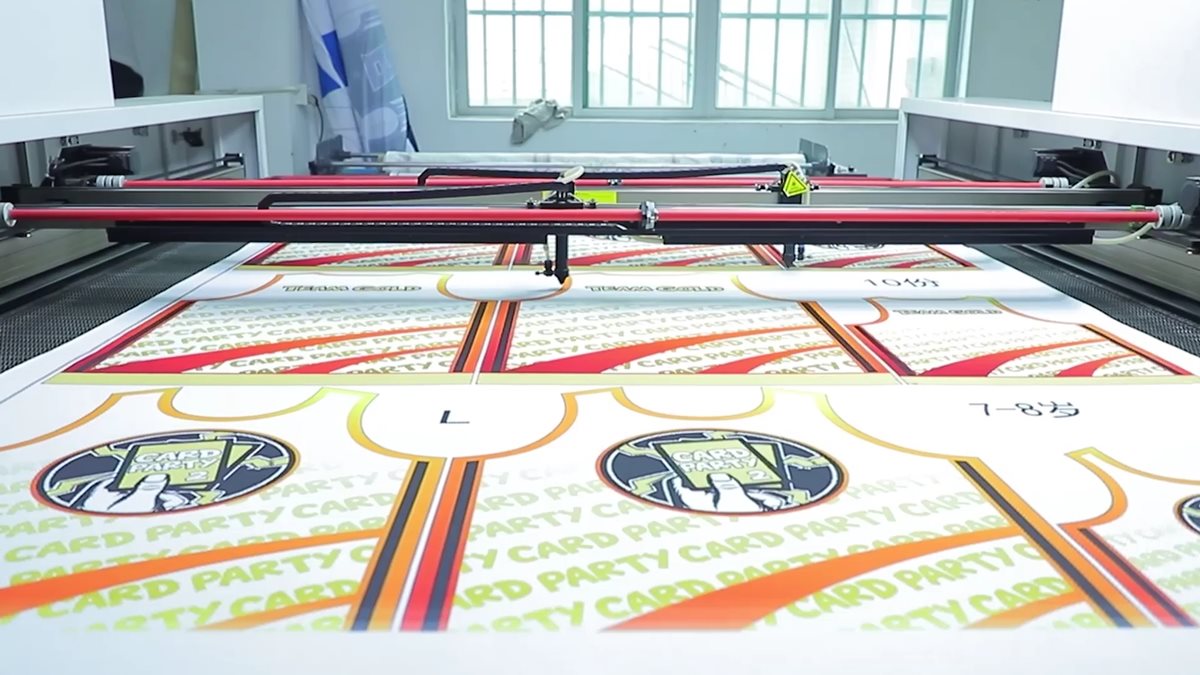
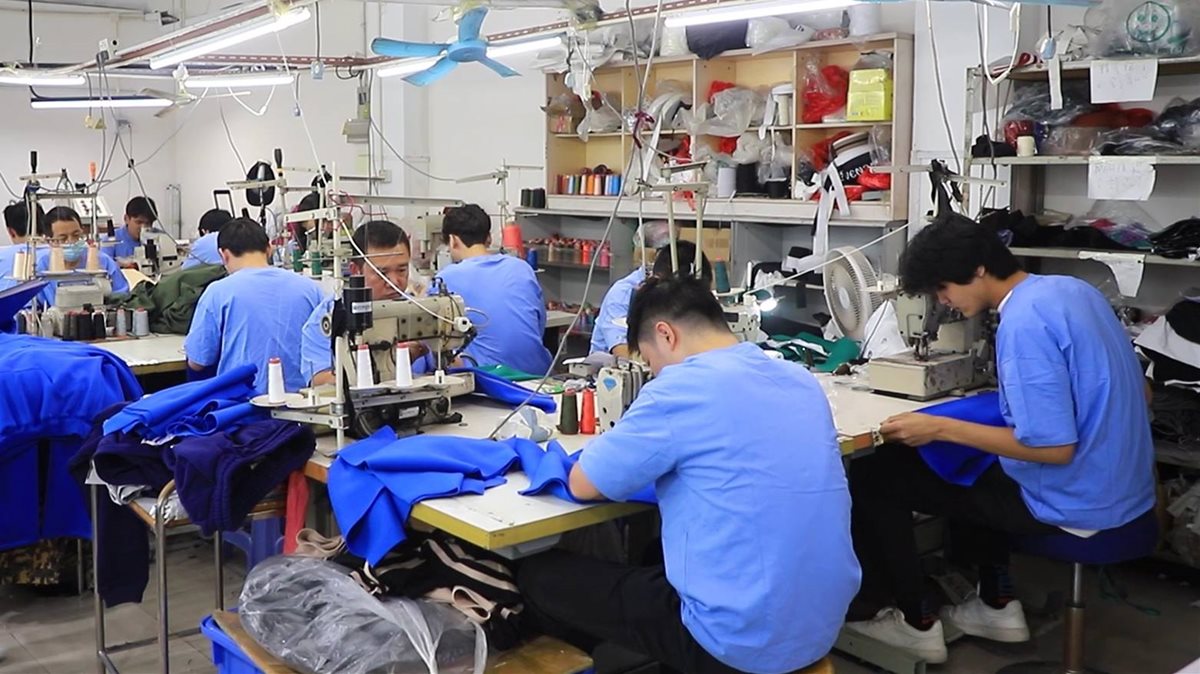
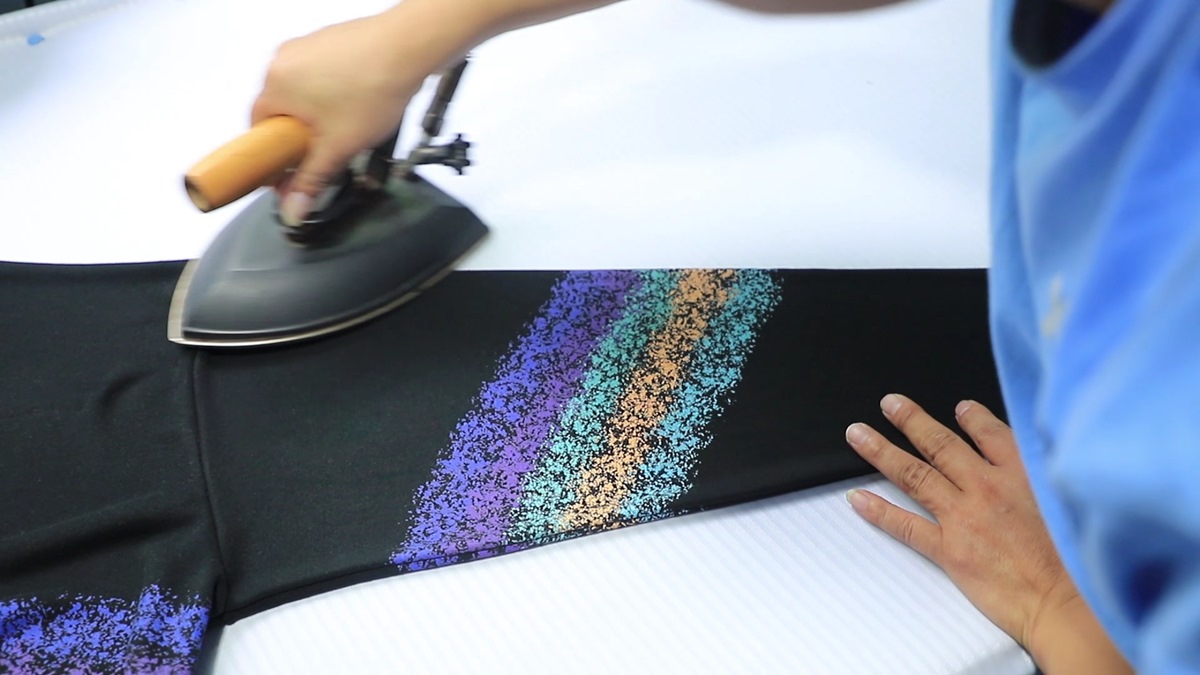
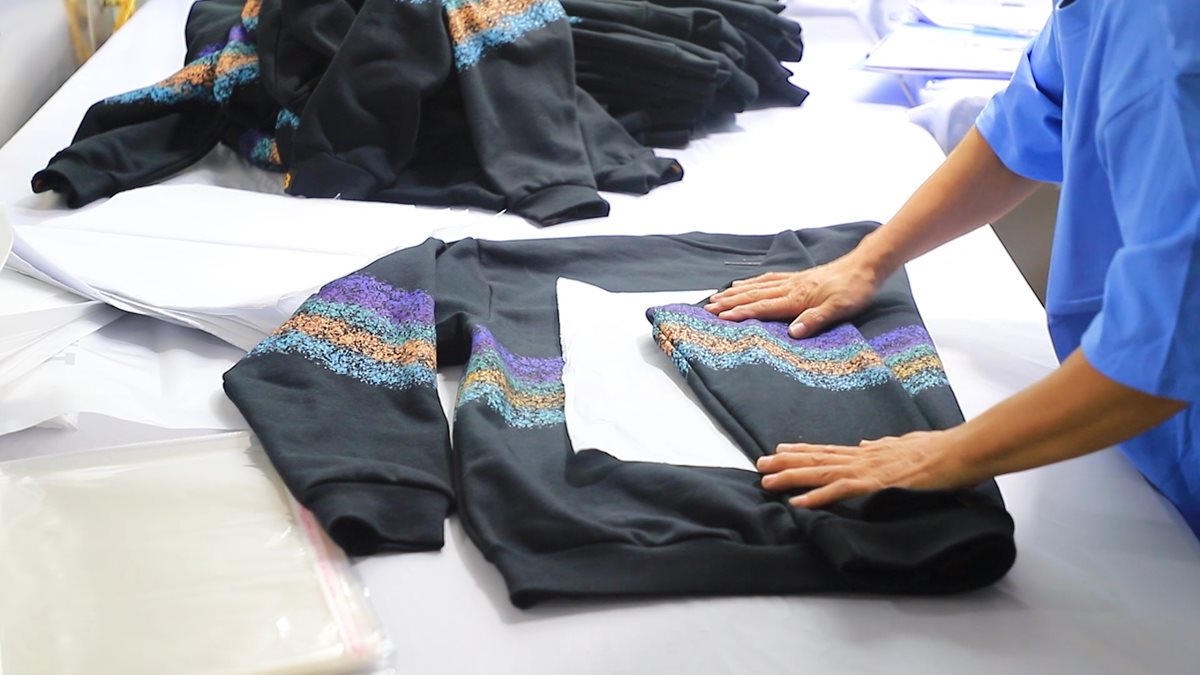
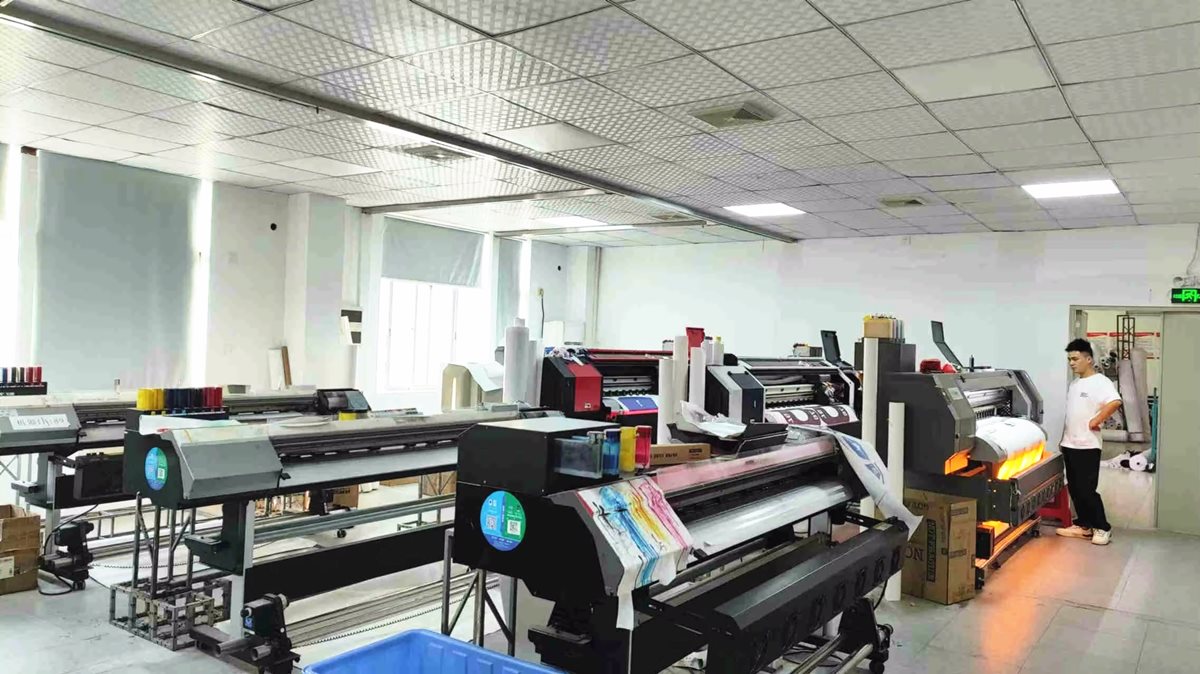
A closer look at how fabric weight, weave structures, and dye chemistry impact product durability and sustainability.
To produce durable denim overalls, manufacturing starts with raw textile engineering. Denim is not a single, uniform fabric. Its performance depends on details like yarn count, cotton-blend ratios, tensile strength, and finishing techniques. NovaFair's technical team works with premium spinning mills to source raw fabrics that meet strict international physical and chemical requirements.
We source denim from 8oz (lightweight fashion items) up to 14.5oz (heavy-duty industrial bibs). Our standard utility overalls feature 12.5oz ring-spun open-end cotton denim, which offers high tear resistance and breathability.
While 100% long-staple cotton is our standard, we also develop custom performance blends. Adding T400 polyester or Cordura nylon fibers improves durability, while 1% to 3% Lycra spandex enhances wearer comfort.
Our washing facility uses ozone fading, eco-friendly enzymes, and laser distressing to replace traditional, water-intensive sandblasting. This approach cuts water consumption by up to 65% and guarantees zero discharge of harmful chemicals.
In addition to fabric selection, we use heavy-duty stitching to ensure durabity. We employ triple-needle chain stitching on the center back and side seams, along with 42-point bartacks at high-stress points like the bib pockets, hammer loops, and side entry points. Our hardware—including shank buttons, slides, and adjustable buckles—is made from lead-free, anti-corrosive copper alloy to withstand industrial laundry processes.
How NovaFair's responsive production setup handles small-scale boutique runs (down to 2 pieces) while remaining ready to scale to high-volume retail orders.
A common challenge for modern apparel brands is the rigid structure of traditional clothing factories. Many high-capacity plants enforce high minimum order quantities (often 1,000+ pieces per style), which can lock up capital and lead to excess inventory. Conversely, smaller workshops often lack the machinery and quality control needed for retail-ready finishes.
Guangdong NovaFair Fashion Co., Ltd. solves this problem by using a Flexible Manufacturing System (FMS). We support minimum orders as low as 2 pieces for custom designs, giving designers, emerging brands, and digital retailers a low-risk way to test new concepts, capsule collections, or pre-order models.
When a product performs well in the market, our production line can scale rapidly. Our facility is equipped with automated cutting systems, CNC pattern sewing stations, and laser distressing machinery that deliver high precision and consistency across large runs. This setup allows us to easily scale production from a 2-piece prototype to a 10,000-unit retail order, maintaining consistent fits, wash shades, and quality standards.
Our commitment to clean energy, circular fashion models, and advanced manufacturing tech over the next five years.
Using 3D CAD draping software to create digital fit models. This cuts physical sampling iterations down by 70%, accelerating production starts and minimizing fabric waste.
Installing water filtration systems that capture, filter, and reuse indigo pigments, helping us achieve zero-waste discharge in our washing facility.
Transitioning standard production lines to GRS-certified post-consumer recycled cotton and biodegradable elastane fibers to support circular product designs.
Integrating RFID chips into finished products to help commercial clients trace items through their logistics networks and confirm authenticity.
How NovaFair meets complex international trade standards, customs inspections, and chemical safety rules.
Exporting custom denim overalls worldwide requires strict compliance with varying safety and quality regulations. What meets standards in North America might not comply with EU rules. NovaFair maintains a dedicated quality assurance and regulatory team to verify that every shipment complies with destination-market laws.
Our quality control process is built on the internationally recognized Acceptable Quality Limit (AQL 2.5/4.0) standard. We carry out inspections at every stage: from raw fabric testing (checking tensile strength, colorfastness, and shrinkage rates) to inline checks (stitching accuracy and pocket alignment) and final pre-packing assessments.
Our raw materials and accessories carry certifications like OEKO-TEX Standard 100, ensuring they are free from harmful substances such as formaldehyde, heavy metals, or azo dyes. Additionally, our factory is regularly audited to ensure ethical labor practices, fair wages, and safe working conditions for all team members.
For international logistics, we handle various export terms—including FOB, CIF, DDU, and DDP—coordinating directly with top global freight forwarders. Whether shipping full container loads (FCL) to major ports or smaller LCL shipments directly to regional warehouses, we handle all customs filings and export paperwork to ensure smooth customs clearance.
Get answers to common technical, logistics, and production questions from our engineering and sales teams.
Our raw denim fabrics go through a pre-shrinking process on our industrial shrinking machines. After that, we wash test sample swatches to calculate precise warp and weft shrinkage rates. These calculations are programmed directly into our CAD pattern software, adjusting pattern shapes to ensure that the finished garments match the target size specifications after washing.
Yes. We offer customization options for all hardware, including engraved brand logos on buttons, rivets, adjustment slides, and zippers. We also produce custom back patches in real leather, faux leather, jacquard fabric, or recycled paper (jacron), customized to your brand's specifications.
For proto samples with in-stock fabrics, sample development takes 3 to 7 days. If custom fabrics are needed, it takes 15 to 20 days. Bulk production lead times generally range from 25 to 45 days after deposit payment and pre-production (PP) sample approval, depending on order size and wash complexity.
We work with international testing agencies like SGS, Intertek, and Bureau Veritas. Upon request, we provide testing certificates verifying compliance with EU REACH, US California Proposition 65, and OEKO-TEX Standard 100 chemical limits.
Our standard payment terms are a 30% deposit with the remaining 70% balance due before shipment, paid via Telegraphic Transfer (T/T) or Letter of Credit (L/C). We ship under various terms, including EXW, FOB Shenzhen/Guangzhou, CIF, and DDP by sea, air, or express courier, depending on your delivery timeline.
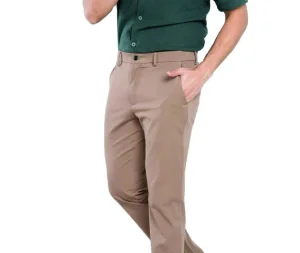
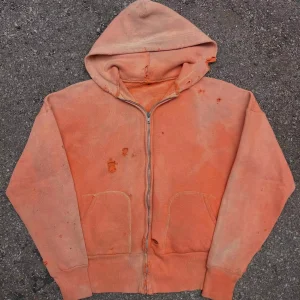
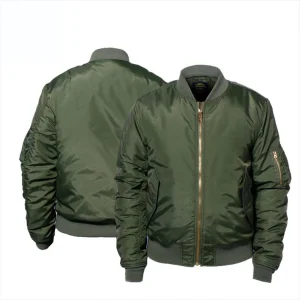
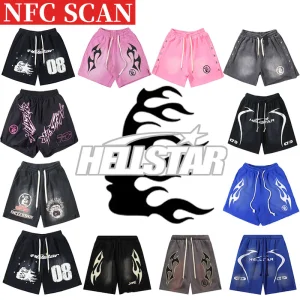
Discover our range of eco-friendly chinos, distressed hoodies, outerwear, and streetwear essentials designed for global distribution networks.
 NovaFair Fashion