Cotton hoodies feel soft, warm, and dependable until the dryer changes their shape. Many people ask, “Why do cotton hoodies shrink so much in the dryer?” The answer involves heat, moisture, and repeated tumbling. Cotton fibers naturally relax during washing, then contract when hot air removes moisture quickly. The spinning drum adds friction, which can shorten the fabric and tighten the knit structure. Thick fleece interiors may shrink unevenly, especially around the sleeves, cuffs, and waistband.
Textile-care expert Mary Marlowe Leverette explains, “Cotton fibers can contract when exposed to high heat after becoming saturated with water.” Her guidance reflects a practical laundry reality. A hoodie labeled “pre-shrunk” may still shrink further. It is not a permanent guarantee. Fiber quality, knitting tension, dyeing, and finishing treatments all matter. Some hoodies lose only a little length. Others become noticeably tighter after several hot cycles.
A safer routine begins before drying. Read the care label carefully. Turn the hoodie inside out, then wash it in cool water. Remove it while slightly damp. Lay it flat on a clean towel, or use the dryer’s lowest heat setting briefly. High heat is the main problem. I have found that air-drying preserves shape better, although it takes longer and feels less convenient. That trade-off is easy to underestimate. Avoid hanging a heavy, wet hoodie, because the shoulders may stretch while the body contracts. No method is perfect. Still, gentle washing, low heat, and careful reshaping can greatly reduce shrinkage and extend the hoodie’s useful life.
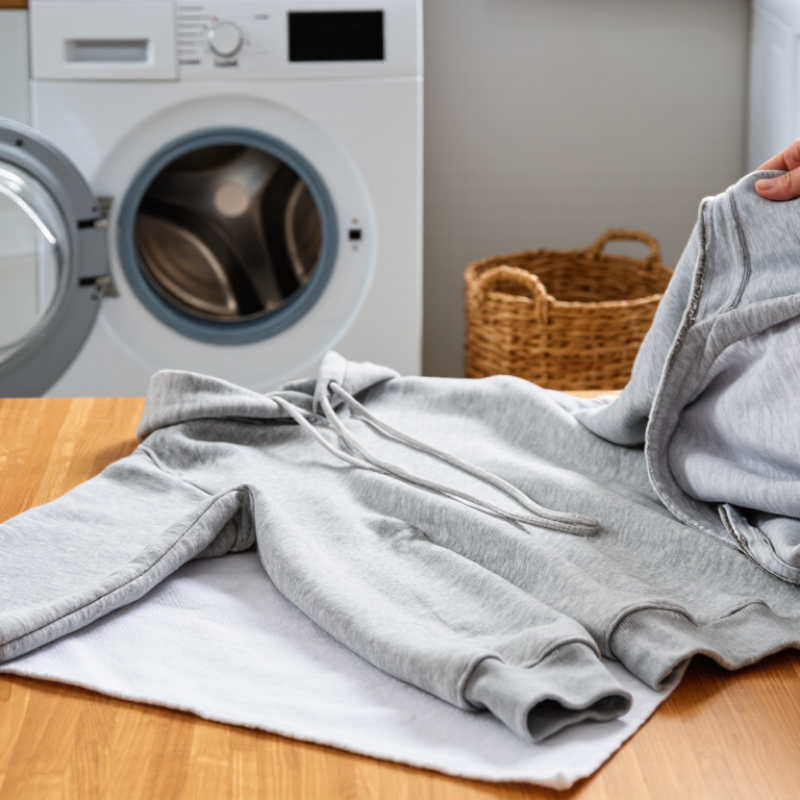
Cotton hoodies can lose 3–5% of their size during the first wash, even when the fabric feels thick and sturdy. This shrinkage usually affects the body length, sleeve length, and overall width. Heat, moisture, and tumbling work together to tighten cotton fibers. A pre-shrunk hoodie may shrink less, but it is not always shrink-proof.
Check the care label before washing. Use cold water and a gentle cycle to reduce fiber stress. Turn the hoodie inside out, then remove it promptly after the cycle ends. While damp, lay it flat on a clean towel and gently reshape the shoulders, cuffs, and hem. Do not pull sharply. Cotton can stretch unevenly.
Air drying is the safest option. If a dryer is necessary, select low heat and stop the cycle while the hoodie remains slightly damp. Let it finish drying flat. I once dried a cotton hoodie on medium heat for convenience, and the sleeves became noticeably shorter. That mistake changed my routine. Measure the hoodie before its first wash, especially if the fit is important. Care labels can be useful, but they cannot predict every fabric blend or finishing method.
Check the care label before washing your cotton hoodie. It may recommend cold water, low heat, or line drying. Those instructions reflect the garment’s fabric, stitching, and finishing. Ignore them, and the sleeves may shorten noticeably. I learned this after one hoodie became tight at the cuffs. That assumption was wrong.
AATCC TM135, a home-laundering test method, measures dimensional changes after controlled washing and drying. It considers water temperature, washing conditions, and drying procedures. The method helps professionals evaluate shrinkage, but it cannot guarantee identical results in every home. Your machine, load size, detergent, and dryer airflow may differ. Use the label as your practical guide.
Wash the hoodie inside out with similar colors. Choose cold or warm water only when the label allows it. Avoid packing the drum tightly. A crowded load can trap heat and moisture. Select the lowest suitable dryer temperature, then remove the hoodie while slightly damp. Lay it flat, smooth the seams, and reshape the hood and cuffs by hand. Do not pull aggressively. Cotton fibers can stretch unevenly when wet. I sometimes check the length against a measuring tape, although I do not do it every time. That small habit reveals gradual changes before they become obvious.
Cotton hoodies shrink when heat, moisture, and movement allow relaxed fibers to tighten. Washing below 30°C helps limit that relaxation before the hoodie reaches the dryer. It is not foolproof. Cotton construction, yarn tension, and finishing treatments also affect the result.
AATCC TM135, a recognized textile-testing method, measures dimensional changes after home laundering. Its testing framework reflects a practical fact: temperature and agitation can change garment measurements.
Use a gentle cycle below 30°C, and turn the hoodie inside out. Cold water protects the surface and reduces friction against zippers or rough fabrics. Avoid overloading the drum. Crowded garments rub harder.
The Textile Exchange 2024 Materials Market Report identifies cotton as roughly 22% of global fiber production in 2023. That scale makes careful cotton care relevant, not merely cosmetic.
After washing, reshape the hood, cuffs, and waistband while damp. Use the dryer only on low heat, and remove the hoodie while slightly moist.
Then lay it flat or hang it briefly. High heat remains the bigger risk.
A cooler wash may not preserve every hoodie perfectly. I have found that thick cotton can still tighten after repeated drying. Air drying takes longer.
Still, below 30°C gives the fibers a gentler start and reduces avoidable shrinkage. Examine the care label, because fabric blends and garment finishes can behave differently.
Cotton hoodies shrink most when heat and tumbling continue after the fabric is nearly dry. I have found that a low dryer setting gives better control than medium or high heat. Check the care label before drying, since cotton blends and printed fabrics can react differently. Shake the hoodie gently, then place it in the dryer with enough space to move freely.
Remove the hoodie when it is about 80–90% dry. It should feel slightly cool and damp, not wet or heavy. That small difference matters. Lay it flat on a clean towel and reshape the sleeves, cuffs, shoulders, and body while the cotton is still flexible. Avoid hanging it immediately, because the damp weight can stretch the shoulders and neckline. A cool room with steady airflow usually finishes the drying process safely.
Do not rely only on the dryer timer. Drying time changes with fabric weight, room humidity, and the machine’s airflow. Check the hoodie every 10 minutes near the end. I sometimes remove mine too early, leaving the pocket damp, so I inspect thick areas separately. If the fabric still feels cold inside the hood, return it to low heat briefly. High heat may seem faster, but repeated exposure can tighten cotton fibers and make the fit noticeably smaller.
| Stage | Recommended Practice | Why It Helps Prevent Shrinkage | Practical Check |
|---|---|---|---|
| Before Washing | Read the care label and confirm that tumble drying is permitted. | Care instructions account for the garment’s fiber content, construction, and finishing. | Check whether the hoodie is 100% cotton or a cotton blend and note any “do not tumble dry” warning. |
| Washing | Use cold or cool water and a gentle cycle when the care label allows it. | Lower washing temperatures reduce exposure to heat, while a gentler cycle can reduce mechanical stress on cotton fibers. | Avoid hot-water cycles unless the care label specifically recommends them. |
| Preparing for the Dryer | Turn the hoodie inside out, close zippers or fasteners, and remove excess water with a moderate spin cycle. | Turning the garment inside out helps protect the outer surface, while removing excess water shortens drying time. | Do not wring the hoodie forcefully, because twisting can distort its shape. |
| Dryer Heat | Select low heat or the delicate setting. | High heat can increase cotton shrinkage by exposing damp fibers to greater thermal stress. | If the dryer has temperature options, choose the lowest setting that is compatible with the care label. |
| Drying Time | Use a shorter cycle and check the hoodie before the cycle ends. | Avoiding unnecessary heat exposure reduces the chance of additional shrinkage and fabric wear. | Pause the dryer periodically rather than relying only on a long automatic cycle. |
| Removal Point | Remove the hoodie when it is approximately 80–90% dry. | Stopping before it is completely dry limits continued heat exposure during the final drying stage. | The fabric should feel mostly dry but still slightly cool or damp at thicker areas such as the cuffs, waistband, and hood. |
| Air-Drying Finish | Lay the hoodie flat or hang it on a broad hanger in a well-ventilated area until fully dry. | Finishing without additional dryer heat minimizes thermal exposure and helps the garment retain its shape. | Reshape the shoulders, sleeves, cuffs, and waistband gently while the fabric is still slightly damp. |
| After Drying | Store the hoodie folded when possible, especially if it is heavy or has a large hood. | Folding can reduce stretching at the shoulders and neckline during storage. | Make sure the garment is completely dry before storing it to help prevent musty odors and mildew. |
Note: Cotton garments may still shrink to some degree, particularly after the first wash. Always follow the specific care instructions on the hoodie’s label.
How to Prevent Cotton Hoodies From Shrinking in the Dryer
Cotton hoodies can lose length and width when heat, moisture, and tumbling relax the fibers. Measure the garment before drying. Lay it flat on a clean table, without stretching the fabric. Record the center-back length from the neckline to the hem, then measure width across the chest. Use centimeters for clearer comparisons.
For reliable results, follow a selected washing and drying procedure from ISO 6330. Record water temperature, cycle, load size, dryer setting, and drying time. After drying, let the hoodie rest flat before measuring again. Measure the same points and calculate dimensional change: (after measurement minus before measurement) divided by before measurement, multiplied by 100. A negative result indicates shrinkage. This method improves repeatability, although home dryers may still vary.
Tips: Use low heat for routine care and remove the hoodie while slightly damp. Reshape the shoulders, sleeves, and hem by hand, then dry it flat. Avoid pulling the fabric aggressively. My early measurements were inconsistent because I measured one hoodie while it was warm and another after cooling. That mistake mattered. For dependable comparisons, keep the measuring surface, garment position, and resting time consistent. A short trial with one hoodie can reveal how your dryer behaves before you risk several garments.
Use low heat with gentle tumbling. High heat can tighten cotton fibers. Check the care label before drying.
Remove it at about 80–90% dryness. It should feel slightly cool and damp, not wet or heavy. Small differences matter.
Lay it flat on a clean towel. Reshape the sleeves, cuffs, shoulders, and hem. Let steady airflow finish the drying.
Damp cotton becomes heavier. Hanging can stretch the shoulders and neckline. Flat drying protects the shape better.
Check it every 10 minutes. Inspect thick areas separately, especially the pocket and hood. They may remain damp inside.
Not reliably. Fabric weight, humidity, and airflow change drying time. A timer may finish too late or too early.
Measure the hoodie flat before drying. Record center-back length and chest width in centimeters. Measure again after the garment cools.
Subtract the original measurement from the final measurement. Divide by the original measurement, then multiply by 100. A negative result shows shrinkage.
Measuring one hoodie while warm can distort results. Keep the surface, garment position, and resting time consistent. I learned this the hard way.
Cotton hoodies can shrink noticeably in the dryer because cotton fibers relax and contract when exposed to moisture, heat, and mechanical tumbling. This is especially common during the first wash, when a 3–5% reduction in size may occur. If you have ever wondered, “Why do cotton hoodies shrink so much in the dryer,” the main causes are excessive heat, prolonged drying, and unsuitable washing conditions. Always check the care label and use home-laundering conditions consistent with AATCC TM135 whenever possible.
To reduce shrinkage, wash the hoodie at temperatures below 30°C and choose a gentle cycle. Use low dryer heat rather than a high-temperature setting, and remove the garment when it is approximately 80–90% dry. Let it finish air-drying naturally on a flat surface. For more reliable results, measure the hoodie’s length and width before washing and again after drying, following the measurement principles of ISO 6330. This helps track dimensional changes and adjust future care methods.

NovaFair Fashion