What Is the Most Versatile Style of Pants for Men?

Time:2026-11-04 Author:Sophia
0%

What Is the Most Versatile Style of Pants for Men? The answer often starts with chinos: they sit comfortably between denim and dress trousers. A well-cut pair works with a plain T-shirt, an Oxford shirt, or an unstructured blazer. That range makes chinos a practical choice for commuting, casual dinners, and many workplaces. Still, versatility depends on fit, fabric, and the settings you actually dress for.

Giorgio Armani once said, “The difference between style and fashion is quality.” Applied to pants, that idea points to useful details: a midweight cotton twill, a clean waistband, and a leg shape that allows easy movement. A neutral shade—such as navy, olive, or stone—also pairs with more of the clothes already in your wardrobe. Small details matter. Pockets that lie flat and hems that meet the shoes cleanly can make an outfit look considered without feeling formal.

There is no universal winner. Slim chinos may feel restrictive on one person, while relaxed trousers may look too loose in a conservative office. I would treat “most versatile” as a useful starting point, not a fixed rule. Try the pants sitting down, walking, and wearing the shoes you use most. Notice where the fabric pulls. A little trial and error is normal. The best pair is the one that fits your body, suits your routine, and still feels comfortable at the end of the day.
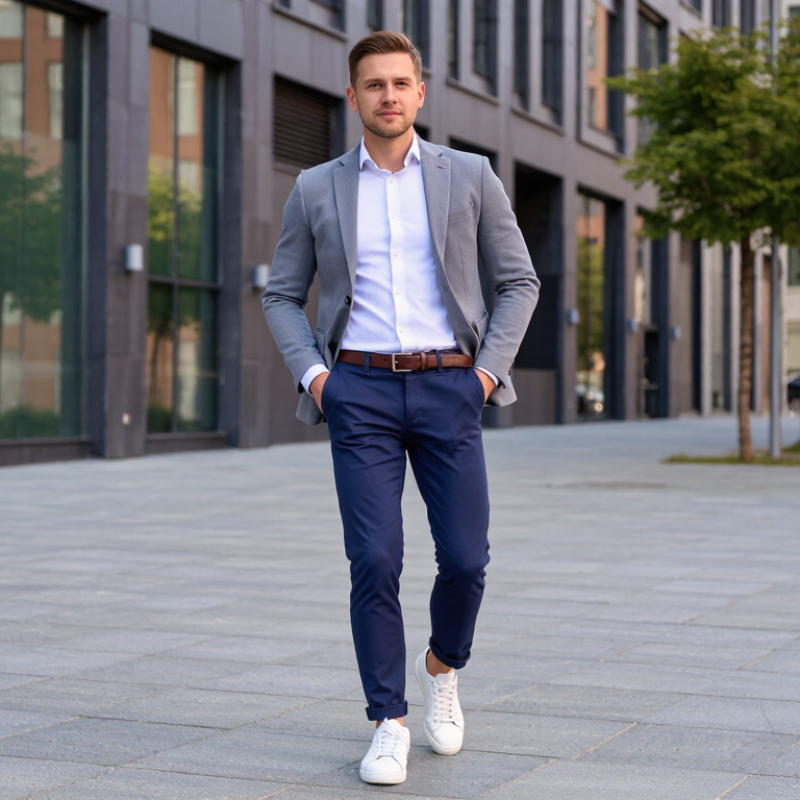
What Is the Most Versatile Style of Pants for Men?

What Defines Chinos: Cotton-Twill Construction and Everyday Wear

Chinos are usually made from cotton twill, a weave with fine diagonal ribs across the fabric. The texture is subtle, but it gives the cloth more structure than a plain cotton weave. Many pairs use midweight fabric, which hangs neatly without feeling as stiff as dress trousers. Some include a small amount of stretch; others do not, so the label matters.

The construction supports everyday wear. A pair can work with a casual shirt, a knit sweater, or a simple button-down. In practical terms, the fabric is breathable, though heavy twill may feel warm on a humid afternoon. Check the stitching at the pockets and seams, and look for a waistband that sits comfortably when you sit.

Fit changes the impression. A tapered leg can look tidy, but too much narrowing may pull across the calf. Chinos also crease, and light colors can show marks quickly.

Not quite carefree.

Their versatility has limits, and I sometimes think we expect one pair to handle too many settings.

Fiber Choices Compared: Cotton, Polyester, and Elastane Blend Percentages

For everyday men’s pants, fiber percentages often matter more than the fabric’s name. Cotton feels soft and lets air move, which helps on warm walks or long commutes. A pair with 97% cotton and 3% elastane usually keeps a familiar cotton feel while allowing easier movement. Small stretch.

Polyester adds wrinkle resistance and tends to dry faster than cotton. In a cotton-polyester blend, such as 65% cotton and 35% polyester, pants may hold their shape through a full day of sitting and standing. The trade-off is warmth: some blends feel less breathable in humid weather. Check the fabric in your hand, but remember that a store touch test cannot predict every climate.

Elastane percentages are usually small, often around 2–5%. That can make bending, cycling, or climbing stairs more comfortable without making the pants feel like athletic leggings. More stretch is not automatically better; a high-elastane fabric may feel clingy, and fit can change with wear. I used to focus on the listed stretch and overlook the weave. That was a mistake. For versatile daily pants, a cotton-rich blend with a little elastane is a sensible starting point, while polyester can help if easy care matters most.

Fit and Styling: How Rise, Leg Shape, and Color Shape Versatility

A versatile pair of men’s pants usually starts with a comfortable mid-rise. The waistband should sit securely without needing a belt to stay up. When sitting, it should not press sharply into the stomach or expose the back. Small fit differences matter. I once favored a lower rise because it looked cleaner on a hanger, but it shifted during a long day. That choice was less practical than I expected.

A straight or gently tapered leg works across more settings than an extremely slim or wide cut. It should skim the thigh and leave enough room to move. Check the hem with the shoes you wear most: a light break over everyday shoes looks relaxed, while a cleaner hem suits sharper outfits. Try walking and sitting before deciding. A mirror can miss things.

Color expands or limits those options. Navy, charcoal, olive, and muted brown pair easily with shirts, sweaters, and casual jackets. Darker shades often feel more polished; lighter ones show dust and creases sooner. Still, “versatile” depends on your routine. A commuter may value a fabric that resists wrinkles, while someone working mostly from home may prefer softer cotton. There is no perfect cut for every body or day, and I have occasionally chosen comfort over a tidier silhouette. The pants I reach for most are not always the most impressive ones.

Colorfastness Testing: AATCC TM61 5A Simulates Five Washes in 45 Minutes

A versatile pair of men’s pants should keep its color through repeated wear and washing. AATCC TM61 5A helps assess that quality with an accelerated laundering test. In roughly 45 minutes, controlled heat, detergent, and agitation simulate the effects of five home washes. That matters.

After testing, technicians examine color change in the garment fabric and any dye transfer to adjacent material. A dark navy trouser, for example, may look sharp on the rack but fade toward gray or stain a pale shirt if its dye is not sufficiently stable. The test offers measurable evidence for comparing fabrics before pants reach everyday use.

Still, the result is a laboratory comparison, not a promise that every household wash behaves identically. Water hardness, detergent choice, and drying conditions can change outcomes. Not perfectly, though. I would treat TM61 5A as one useful checkpoint, alongside fabric construction and care instructions. A pair worn from the office to a weekend outing gets frequent use; reliable color retention helps it stay presentable without limiting how often it can be worn.

Durability Testing: How ASTM D4966 Measures Fabric Abrasion Resistance

For men’s pants, versatility is not only about color or cut. Fabric must also handle repeated friction at the knees, inner thighs, and seat. ASTM D4966 offers a controlled way to assess textile abrasion resistance using a Martindale-type tester. Small fabric specimens are rubbed against an abrasive surface in a repeating pattern under a set pressure. The test records how the material responds over repeated cycles.

That number needs context. Inspectors may assess wear using criteria such as yarn breakage or visible damage, depending on the test procedure. More cycles before a defined change can suggest better resistance under those specific conditions. But the test does not reproduce every scrape against a rough chair or bicycle saddle. Real life is messier.

A high result is not a promise of longer-lasting pants. Stitching, fabric weight, weave, fit, and care all affect how trousers perform. ASTM D4966 tests fabric samples, not an entire pair of pants, so seams and construction need separate consideration. For everyday wear, compare test results only when the fabrics and testing conditions are similar. Then look closely at the garment’s high-friction areas. Small details matter. A sturdy fabric can still feel stiff, and a softer one may show wear sooner. There is no perfect trade-off.

What Is the Most Versatile Style of Pants for Men? — Durability Testing: How ASTM D4966 Measures Fabric Abrasion Resistance

Pants style Typical settings Common fabric construction Practical abrasion considerations Versatility What ASTM D4966 can indicate
Straight-leg chinos Office-casual wear, travel, and everyday use Usually woven cotton twill; some versions include elastane for stretch Twill construction is suitable for regular wear, but performance varies with yarn, fabric weight, finishing, and garment construction. High — works across casual and many smart-casual settings A Martindale abrasion test can compare fabric specimens by recording rubbing cycles to a defined endpoint, such as yarn breakage. It does not rate the whole garment.
Dark, straight-leg jeans Casual wear, weekends, and some relaxed workplaces Woven denim, commonly cotton; stretch denim may contain elastane Denim weight and construction affect wear behavior. Abrasion resistance is not determined by color or fiber content alone. High for casual wardrobes; more limited for formal settings The method can assess abrasion resistance of denim samples under specified test conditions; results should be compared only when the test setup and endpoint are comparable.
Wool dress trousers Business, formal occasions, and tailored outfits Woven wool or wool-blend suiting fabric Suiting fabrics are selected for drape and appearance as well as wear. Seat and inner-thigh wear can depend on fit and use. Moderate — excellent for dress settings, less suited to rugged everyday use Testing can compare abrasion behavior of the suiting fabric, but a lab result alone does not establish service life or resistance to every type of damage.
Cargo pants Outdoor activities, practical everyday wear, and casual settings Often woven cotton or synthetic-blend fabrics, sometimes with reinforced panels Fabric weight, reinforcements, pocket construction, and seams all affect durability; abrasion testing addresses the tested fabric specimen, not pocket or seam strength. Moderate — practical, but the pocketed design is less suited to dressier settings ASTM D4966 may be used to compare fabric abrasion resistance, while separate evaluations are needed for seams, trims, and other garment components.
Stretch travel pants Commuting, travel, and active everyday use Often woven nylon or polyester blends with elastane Stretch, fabric structure, and finishing influence comfort and wear. Abrasion performance should be confirmed for the specific fabric rather than inferred from fiber names. High for active and travel use; styling varies by cut and finish Abrasion cycles can provide a comparative result under the chosen procedure, but they do not measure stretch recovery, pilling, or colorfastness.

How to read the test: ASTM D4966 describes a Martindale abrasion-resistance test for textile fabrics. A result is tied to the specimen, test conditions, and chosen endpoint; the standard is a test method, not a universal pass/fail rating. For broad everyday versatility, straight-leg chinos are a balanced choice, while the most suitable fabric depends on intended use and verified test results.

FAQS

What fabric blend works well for everyday men’s pants?

A cotton-rich blend with a little elastane feels familiar and allows easier movement. For example, 97% cotton and 3% elastane is a practical starting point.

What does polyester add to pants?

Polyester can help pants resist wrinkles and dry faster. A 65% cotton and 35% polyester blend may hold its shape through a day of sitting and standing.

Do pants with more elastane always feel better?

No. Around 2–5% elastane often adds useful stretch, while higher amounts may feel clingy. I once focused on stretch and ignored the weave. That was a mistake.

Which rise is suitable for everyday wear?

A comfortable mid-rise should stay secure without a belt. Sit down to check that the waistband does not press sharply or expose your back.

Which leg shape is easiest to wear in different settings?

A straight or gently tapered leg usually leaves room to move and pairs with many outfits. Very slim or wide cuts can feel less adaptable.

How should I check the hem length?

Try the pants with your usual shoes. A light break looks relaxed, while a cleaner hem can suit sharper outfits. Walk around, too.

Which colors are easy to pair?

Navy, charcoal, olive, and muted brown work with shirts, sweaters, and casual jackets. Lighter shades show dust and creases sooner.

How can I choose pants for my routine?

Commuters may prefer wrinkle resistance, while people working at home may favor softer cotton. There is no perfect cut for every day. Comfort sometimes wins.

Conclusion

What is the most versatile style of pants for men? Chinos are a strong choice for their cotton-twill construction and easy transition between casual and polished outfits. Their versatility depends on more than fabric: cotton offers a familiar, breathable feel, while polyester can add shape retention and elastane provides stretch. The proportions of each fiber affect comfort, movement, and how well the pants hold their form.

Fit and color also shape how easily chinos work across occasions. A suitable rise and leg shape can create a balanced silhouette, while neutral shades pair with a wide range of tops and shoes. To assess long-term performance, colorfastness testing such as AATCC TM61 5A simulates five washes in 45 minutes, and ASTM D4966 evaluates fabric resistance to abrasion. Together, these factors help identify chinos that look adaptable and remain comfortable through regular wear.

Sophia

Sophia

Sophia is a dedicated marketing professional with an exceptional depth of knowledge about her company's products and services. With a keen understanding of market trends and customer needs, she crafts insightful blog posts that not only inform but also engage readers, enriching the company’s online......