Why do jeans bleed color in the wash? The answer begins with indigo, a dye that sits partly on the cotton surface instead of bonding completely with every fiber. Loose indigo particles can lift during washing. Warm water, strong detergent, long cycles, and aggressive spinning make this release worse. Dark blue water is often the visible result.
Denim industry authority Chip Bergh, former Levi Strauss & Co. CEO, once said, “A good pair of jeans doesn’t really need to be washed in the washing machine.” His advice reflects practical denim care, not just marketing. Fewer washes usually mean less color loss and less fabric stress. Still, avoiding the machine forever is unrealistic for many households. Jeans collect sweat, dust, food stains, and outdoor odors.
This guide explains how to stop jeans from bleeding color in the wash without damaging their shape. You will see why turning jeans inside out matters, how cold water reduces dye movement, and when vinegar may help—or disappoint. Not every home remedy works equally well. Some can even create false confidence.
Cold water first.
We will also compare gentle detergents, short cycles, hand washing, and air drying. A useful test is simple: press a white cloth against a hidden seam after washing. If blue transfers heavily, the dye still needs careful handling. These steps cannot prevent every fade. They can, however, slow it down and protect nearby clothing from unwanted blue stains.
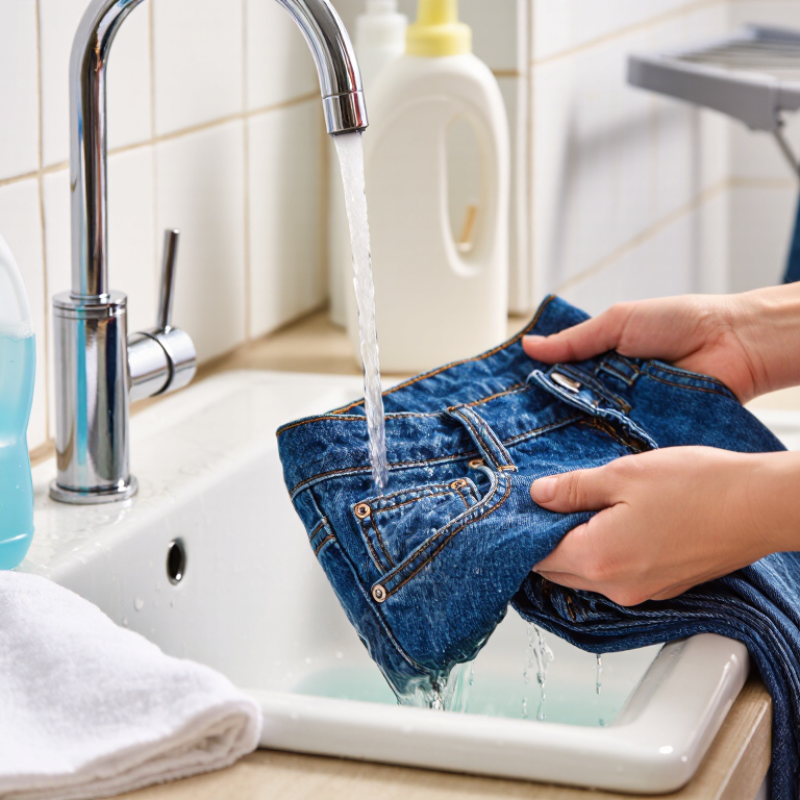
Jeans bleed color because indigo dye often sits near the cotton fiber’s surface. During washing, water, detergent, heat, and friction loosen these particles. Dark denim can release more dye during its early washes, especially when the fabric has a heavy, saturated finish. The dye may then transfer onto lighter clothes, towels, or the washing machine drum.
AATCC TM61 A professional colorfastness method, uses a 45-minute accelerated test designed to represent about five home launderings. This shows how quickly repeated agitation can challenge unstable color. Alkaline detergents may increase dye movement, while warm water can speed it further. Turn jeans inside out, wash them separately in cold water, and choose a mild liquid detergent. Keep the cycle short. Avoid soaking them overnight.
I once believed salt would permanently lock in denim color. It did not. That common advice is incomplete. Salt may reduce loose dye in some situations, but it cannot repair poor dye fixation. Air-drying also helps because high heat can encourage fading and shrinkage. A color-catching sheet may reduce transfer, but it is not a guarantee. Test new jeans with a damp white cloth before washing. If blue marks appear, treat the garment as high-risk for bleeding. A careful wash protects nearby fabrics, though some color loss remains normal.
How to Stop Jeans from Bleeding Color in the Wash?
New jeans can release excess indigo during their first wash. Preparation matters more than emergency stain removal. I always read the care label before doing anything. Some denim needs special handling.
Empty every pocket and close the zipper and button. Turn the jeans inside out. Then rub a damp white cloth over a hidden seam. If the cloth turns blue, wash the jeans alone. For very dark denim, a short cold-water soak can loosen surface dye. Keep it brief, around ten minutes. Long soaking may cause uneven fading.
Use a small amount of gentle liquid detergent. Choose a cold, delicate cycle with plenty of water. Avoid hot water, bleach, and strong whitening products. They can increase fading or weaken cotton fibers. Do not overload the machine. Dark towels may be safe, but only after the color test. I once washed new jeans with pale cotton clothes. That was my mistake.
Remove the jeans promptly after washing. Hang them inside out, away from direct sunlight. A dryer may shrink the fabric and speed up fading. Vinegar and salt are often recommended online, but they are not reliable dye fixers. No home method prevents every bit of bleeding. Check the water and fabric after each wash, then adjust your routine.
| Preparation or Washing Step | Recommended Setting or Action | Why It Helps Reduce Color Loss | When to Use It | Expected Benefit |
|---|---|---|---|---|
| Check the care label | Follow the garment’s stated washing and drying instructions. | Different denim finishes, stretch fibers, and dyes may require different care. | Before the first wash | High |
| Test for loose dye | Dab a hidden seam with a clean, damp white cloth. If blue transfers easily, wash the jeans alone. | Identifies excess surface dye before it can stain lighter garments. | Before the first wash and whenever color transfer is suspected | High |
| Turn jeans inside out | Zip the fly, fasten buttons, and turn the jeans inside out. | Reduces direct friction and limits fading on the outer surface. | Every wash | High |
| Separate dark denim | Wash new or very dark jeans alone, or with other dark items. | Prevents loose indigo dye from transferring to white or light-colored fabrics. | First several washes or until bleeding decreases | High |
| Use cold water | Select a cold cycle, generally about 20–30°C (68–86°F), when permitted by the care label. | Lower temperatures generally reduce dye release and fiber stress compared with hot washing. | Every wash | High |
| Choose a gentle cycle | Use a gentle or delicate cycle with a moderate spin speed. | Less mechanical action helps limit abrasion, which can remove surface dye. | Every wash, especially for stretch denim | Medium–High |
| Use a small amount of mild detergent | Use the recommended amount of liquid detergent; avoid overloading the washer. | Effective cleaning with less residue and less need for repeated washing. | Every wash | Medium |
| Avoid bleach and harsh stain removers | Use a color-safe treatment only after checking its label and testing an inconspicuous area. | Strong bleaching agents can strip or alter indigo and other textile dyes. | Whenever treating stains | High |
| Skip unnecessary soaking | Do not leave jeans submerged for long periods; use the normal wash cycle. | Extended exposure to water and detergent can encourage additional dye migration. | Before and during washing | Medium |
| Air-dry away from direct sunlight | Hang or lay flat according to the care label, keeping the jeans inside out and away from strong sunlight. | Avoids high heat and helps reduce further fading caused by ultraviolet exposure. | After every wash | High |
| Wash only when needed | Air the jeans between wears and spot-clean small marks when practical. | Fewer wash cycles mean less exposure to water, detergent, heat, and friction. | Throughout the garment’s use | High |
Note: Some color transfer may still occur, especially with dark indigo denim. Always prioritize the garment care label and keep dark jeans away from light fabrics until the dye release has noticeably decreased.
How to Stop Jeans from Bleeding Color in the Wash?
Washing settings matter more than many people expect. Turn jeans inside out before placing them in the machine. This reduces direct friction on the outer surface. Use cold water, preferably below 30°C, because heat can loosen indigo dye from cotton fibers. Select a gentle or delicate cycle with a short wash time. Strong agitation may create pale streaks around the thighs and seams.
Choose a low or medium spin speed. High spinning can twist denim sharply and increase surface wear. Use a small amount of liquid detergent designed for dark clothing. Too much detergent may leave residue, while harsh formulas can fade color faster. Wash jeans with other dark garments, but avoid overcrowding the drum. Clothes need room to move freely.
I used to wash denim with warm water, and the change was obvious. The first rinse looked blue-gray. Still, cold washing does not prevent every color loss. Some untreated denim naturally releases excess dye during early washes. I sometimes wash a new pair separately, although that uses more water. After the cycle, remove the jeans promptly and reshape the waistband and legs. Air-dry them in the shade, away from direct sunlight. Avoid the tumble dryer when possible. Heat can shrink denim and dull its finish. A cooler setting is safer, but not completely harmless.
How to Stop Jeans from Bleeding Color in the Wash?
Dark denim often releases loose dye during its first few washes. Turn jeans inside out, zip them, and wash them separately. Use cold water and a small amount of liquid detergent. Excess detergent can leave residue and may not remove loose dye effectively. The U.S. Department of Energy reports that water heating uses about 90% of a washing machine’s energy. Cold washing therefore protects color and reduces energy demand.
Vinegar is useful, but it is not a magic color fixer. Add about half a cup of white vinegar to the rinse compartment, never directly with detergent. Do not mix vinegar with bleach or other cleaning chemicals. AATCC TM61, a professional textile test method, evaluates colorfastness during accelerated laundering. Home washing is gentler, yet results still vary by dye and fabric finish. I once soaked dark jeans in vinegar overnight. The color barely improved, and the fabric smelled sharp. That shortcut was wrong.
Test the jeans first. Rub a hidden seam with a damp white cloth. If blue transfers heavily, use a separate wash. Choose a mild detergent designed for dark garments, and avoid hot cycles, long soaking, and harsh stain removers. Cold water reduces risk, but it cannot stop every dye from bleeding. Air-dry jeans in shade, away from direct sunlight. A dryer may fade the surface faster. Check the care label, too. It may contradict your preferred routine.
Use the lowest practical water temperature to help reduce dye migration: cool water is typically around 20°C (68°F), cold water around 30°C (86°F), and warm water around 40°C (104°F). Wash jeans inside out with a mild detergent, avoid excessive detergent, and test vinegar on an inconspicuous area first. Vinegar may help remove detergent residue, but it is not a guaranteed dye fixative.
Drying is where loose indigo dye can travel. It may mark pale towels, nearby clothes, or even a light drying rack.
Turn jeans inside out before washing and drying. Keep them with dark garments during the first few washes. After the cycle ends, remove them promptly. Do not leave them in a warm, wet pile. That moisture gives dye more time to move.
Shake them gently to open the seams. Avoid hard wringing, which can create pale streaks and distort the fabric. Hang jeans in a shaded, breezy place, preferably by the waistband. Keep the legs separated. Direct sunlight can fade the outer surface unevenly, while poor airflow may leave the pockets damp.
Air-dry them fully before wearing or storing them. Feel the waistband, pockets, and thick hems. They often stay wet longer than the legs. A fan can improve airflow, but it should not blow hot air. High dryer heat may encourage color transfer and can shrink cotton fibers. If a dryer is necessary, choose low heat and remove the jeans while slightly damp. Finish them on a hanger.
One practical check helps. Rub a hidden damp seam against a white cloth. If blue appears, dry the jeans separately next time. This test is not perfect, because fabric pressure and moisture change the result. Still, it reveals a problem before your pale sofa does. Avoid assuming every wash behaves the same; dark denim can release dye for several cycles.
Yes. This reduces friction on the visible surface and helps protect the outer color. Zip them first.
Use cold water, preferably below 30°C. Heat can loosen dye from cotton fibers. Cold washing reduces risk, but cannot stop every color change.
Select a gentle cycle with a short wash time. Use low or medium spin. Strong agitation may create pale streaks near thighs and seams.
Often, yes. Test a hidden seam with a damp white cloth. Heavy blue transfer means a separate wash is safer.
Use a small amount of liquid detergent for dark clothing. Too much may leave residue. Harsh formulas can fade the surface faster.
Vinegar may help slightly, but it is not a magic color fixer. Add about half a cup to the rinse compartment. Never mix it with bleach or other cleaning chemicals.
Remove them promptly and reshape the waistband and legs. Hang them in shade with good airflow. Keep the legs separated.
Air-drying is safer. If a dryer is necessary, choose low heat and remove the jeans while slightly damp. Finish them on a hanger.
Rub a hidden damp seam against a white cloth. Blue marks suggest separate drying next time. The test is useful, but not perfect.
Warm washing, long soaking, and direct sunlight can all dull denim. I once used warm water, and the rinse turned blue-gray. That choice was poor.
Why do jeans bleed color in the wash? Denim can release excess dye, especially when it is new, because the pigment has not fully bonded to the fabric. Friction, warm water, strong detergents, and washing with light-colored clothing can increase color loss and transfer. Before the first wash, turn jeans inside out, check the care label, and consider rinsing them separately to remove loose dye.
To preserve their color, use cold water, a gentle cycle, and a small amount of mild detergent. A little white vinegar may help reduce odor and support color retention, but it should be used carefully and never mixed with bleach or other harsh products. Avoid soaking denim for too long, and wash it only when necessary. After washing, reshape the jeans and air-dry them inside out, away from strong sunlight or high heat. This helps prevent dye from spreading, fading, or becoming permanently set in unwanted areas.

NovaFair Fashion