Turning worn jeans into practical summer shorts can extend a garment’s life with only a ruler, fabric scissors, and patience. This simple project also reflects a wider shift toward mindful clothing use. The Ellen MacArthur Foundation reports that doubling clothing use could reduce fashion’s greenhouse-gas emissions significantly. The 2024 ThredUp Resale Report also projects the global secondhand apparel market will reach $350 billion by 2028. Small alterations matter.
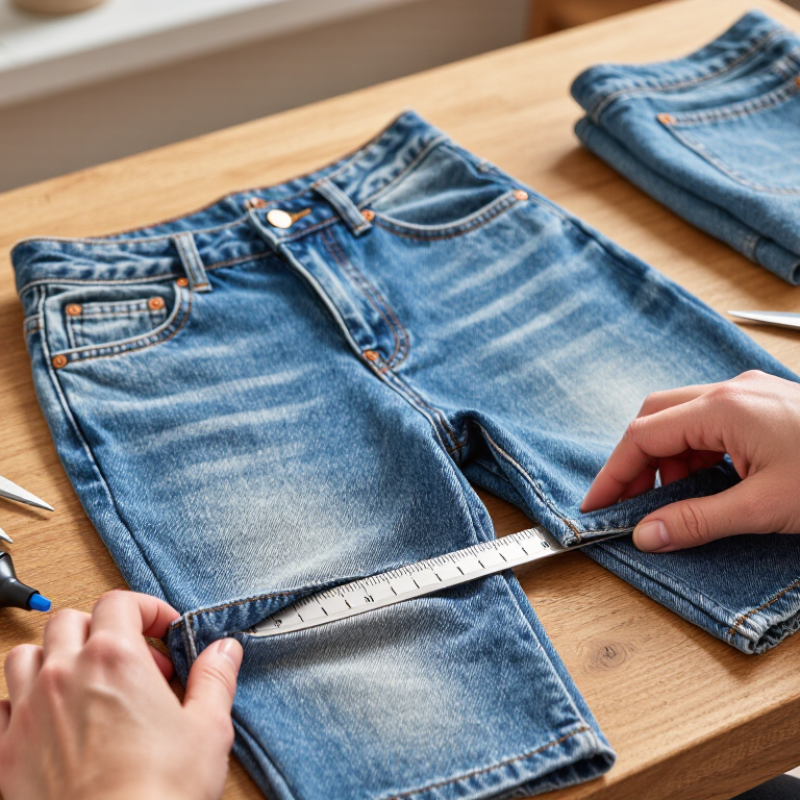
This guide explains How to cut jeans into shorts at home without sacrificing comfort or structure. You will learn how to measure the inseam, mark a balanced hem, and cut gradually around thick denim seams. A washable fabric marker helps create visible guidelines. Place the jeans flat on a table. Smooth every wrinkle before measuring. The first cut may not look perfect. That is normal.
Details make the difference. Leave extra length for a cuff, raw edge, or later correction. Cut one leg first, then use it as a template for the other. Check both sides while standing, because the fabric can shift during cutting. Sharp shears produce cleaner edges and reduce fraying. Handle them carefully, especially near rivets and pocket hardware. For a polished finish, reinforce loose threads instead of pulling them aggressively.
UNEP identifies textiles as a major contributor to environmental pressure, including substantial water use and greenhouse-gas emissions. Reworking existing denim cannot solve fashion’s entire impact. It can, however, prevent one wearable pair from becoming immediate waste. Measure twice. Cut slowly.
Before cutting, check the denim weight. Most jeans use 8–14 oz fabric, according to common denim manufacturing guidance from CottonWorks. One ounce per square yard equals about 33.9 grams per square meter. ASTM D3776/D3776M provides the standard method for measuring fabric mass.
This matters at home. Lightweight 8–10 oz denim usually frays quickly and feels softer. Heavy 12–14 oz denim creates firmer hems and sharper folds.
I once cut a thick pair without washing it first. The legs tightened slightly afterward. That mistake changed the finished length.
Lay the jeans flat and mark the inseam with tailor’s chalk. Add 2–3 centimeters for a raw, frayed edge. Add 4–5 centimeters for a folded hem.
Use fabric scissors, not kitchen scissors. Cut one leg first, then compare both sides before cutting the second.
Heavy denim can shift under pressure. A ruler and several clips help keep the line straight.
Do not rely only on the existing seam.
Tips:
Wash and dry the jeans before measuring. Test the scissors on the hidden hem.
For 8–10 oz denim, leave extra length because fraying spreads faster.
For 12–14 oz denim, make small snips before cutting across the full width.
The cut may still look uneven. That is normal.
Trim slowly after trying the shorts on with the shoes you usually wear.
Industry specifications describe fabric weight, not comfort, so your movement test remains essential.
Measure the inseam before making any cut. Lay the jeans flat, matching the waistband and inner seams carefully. Measure from the crotch seam to your preferred finished length. Use the same measurement on both legs, but check the original stitching first. Denim legs can differ slightly after washing.
Mark the finished inseam with tailor’s chalk. Then measure 1.5 cm below that line for the hem allowance. Draw a second, clear cutting line around each leg. The extra fabric supports a folded hem and reduces fraying. Keep the chalk line visible, but avoid pressing too hard. A soft measuring tape follows the curved crotch more accurately than a rigid ruler.
Cut slowly with sharp fabric scissors. Turn the jeans inside out and pin the hem before stitching. My first attempt was uneven because I trusted one measurement. I should have checked both legs again. Small errors show clearly on short garments.
According to WRAP’s Valuing Our Clothes report, extending clothing life by nine months can reduce its carbon, water, and waste footprints by about 20–30%. Careful alterations help preserve useful denim instead of discarding it. The U.S. Environmental Protection Agency reported that textiles generated 17 million tons of municipal waste in 2018, with only about 2.5 million tons recycled.
Measure twice. Cut once.
How to Cut Jeans into Shorts at Home?
Choose jeans that fit comfortably at the waist and hips. Wash and dry them before cutting, because denim can change slightly after laundering. Try them on with the shoes you usually wear. Mark the desired length with chalk, then remove the jeans and measure both legs from the waistband. Matching measurements matters more than guessing by eye.
Use sharp fabric shears, not dull household scissors. Dull blades can pull threads and create a jagged edge. Cut slowly along the chalk line, keeping the fabric flat on a table. Make short, controlled snips instead of forcing the shears through several layers. Check both legs after every few inches. A full-length ruler can help keep the lines even. Do not rush.
Leave extra fabric below your first mark. You can always shorten the shorts, but you cannot easily restore removed denim. I once cut too close to my preferred length and regretted losing that adjustment space. Try the shorts on again before trimming the edges. If one leg looks longer, correct it with small cuts rather than removing a large section. Fraying will continue after cutting, so allow for that change. You may prefer a clean folded hem, a narrow cuff, or a naturally worn edge. Test the edge on a small hidden area first, since some denim unravels faster than expected.
Mark the desired length while wearing the jeans with shoes you often use. Stand naturally, then add two centimeters for the folded hem. Remove the jeans and draw an even cutting line with tailor’s chalk. Measure from the original side seams, because the legs may not be perfectly symmetrical. Cut slowly with sharp fabric scissors. A rough line is difficult to correct.
Leave the edge raw temporarily. Turn the shorts inside out and fold the cut edge upward by one centimeter. Press the fold with an iron on a suitable heat setting, using a thin cloth if the denim feels delicate. Pin the fold around each leg, then stitch close to the upper fold. A second line near the lower edge adds stability. Keep the stitching even, but do not worry about tiny imperfections. Handmade clothing rarely looks factory-perfect.
A 1 cm folded hem hides loose threads and reduces fraying during washing and daily wear. It will not prevent every fiber from escaping, especially with heavily worn denim. Wash the shorts inside out on a gentle cycle and inspect the hem afterward. If a few threads appear, trim them carefully instead of pulling them. I once made the fold uneven by rushing the side seam, so I now check both legs together before sewing. Small adjustments make the final shape look intentional.
Cutting old jeans into shorts looks easy, but the wash test deserves more attention. Denim may shrink about 3–5% in hot water, especially when the fabric is mostly cotton. The actual change depends on the weave, previous washing, stretch content, and drying temperature. AATCC TM135, the professional method for evaluating dimensional change during home laundering, measures length and width before and after washing. Use the same idea at home. Measure the inseam, leg opening, and waistband before cutting.
I once cut a pair too short because I trusted the unwashed measurement. That mistake was annoying. Mark your desired length with chalk, then leave an extra 2–3 cm for shrinkage and fraying. Wash one test pair first, preferably in warm water if you normally use that setting. Lay the shorts flat while damp, and measure again after drying. Hot tumble drying can increase dimensional change, while elastane-containing denim may lose some comfort under high heat. The 3–5% figure is useful, but it is not a promise.
Tips: Cut gradually. Try them on between cuts. Keep the original hem if you want cleaner edges. For raw or very stiff denim, test a small offcut first. Record the measurements in a notebook; memory is unreliable. A slightly longer first cut is easier to correct than a short one.
Denim can tighten slightly after laundering. Measure the washed jeans, not the unwashed pair. I once skipped this step and lost some length.
Try on the jeans with your usual shoes. Mark the length while standing naturally. Leave extra fabric for later adjustments.
Add 2–3 centimeters for a raw, frayed edge. Add 4–5 centimeters for a folded hem. Extra length is safer than cutting too short.
Use sharp fabric shears, tailor’s chalk, a ruler, and clips. Avoid dull household scissors. They can pull threads and create uneven edges.
Cut one leg first and compare it with the uncut leg. Measure from the waistband and side seams. Do not trust the original hem alone.
Lightweight denim may fray quickly, so leave extra length. Heavy denim can shift during cutting. Make small snips before cutting across the full leg.
Try the shorts on before trimming. Leave the edge raw temporarily, then inspect the shape. Fraying is normal, but it may spread unevenly.
Fold the edge upward by about one centimeter. Press, pin, and stitch the fold evenly. It reduces loose threads, but it cannot stop every fiber.
Learning how to cut jeans into shorts at home is a simple way to refresh an old pair of denim. Before making any cuts, check the fabric weight, since most jeans are made from denim between 8 and 14 ounces. Try on the jeans, measure the inseam, and mark your preferred length with tailor’s chalk. Add about 1.5 cm for the hem allowance so you have enough fabric to create a neat finish.
Use sharp fabric shears and cut slowly, making sure both legs remain symmetrical. After cutting, fold the raw edge inward by approximately 1 cm and stitch or press it in place to help reduce fraying. Finally, wash-test the shorts, especially if using hot water, because denim may shrink by around 3–5%. This allows you to confirm the final fit and length before wearing them regularly.

NovaFair Fashion